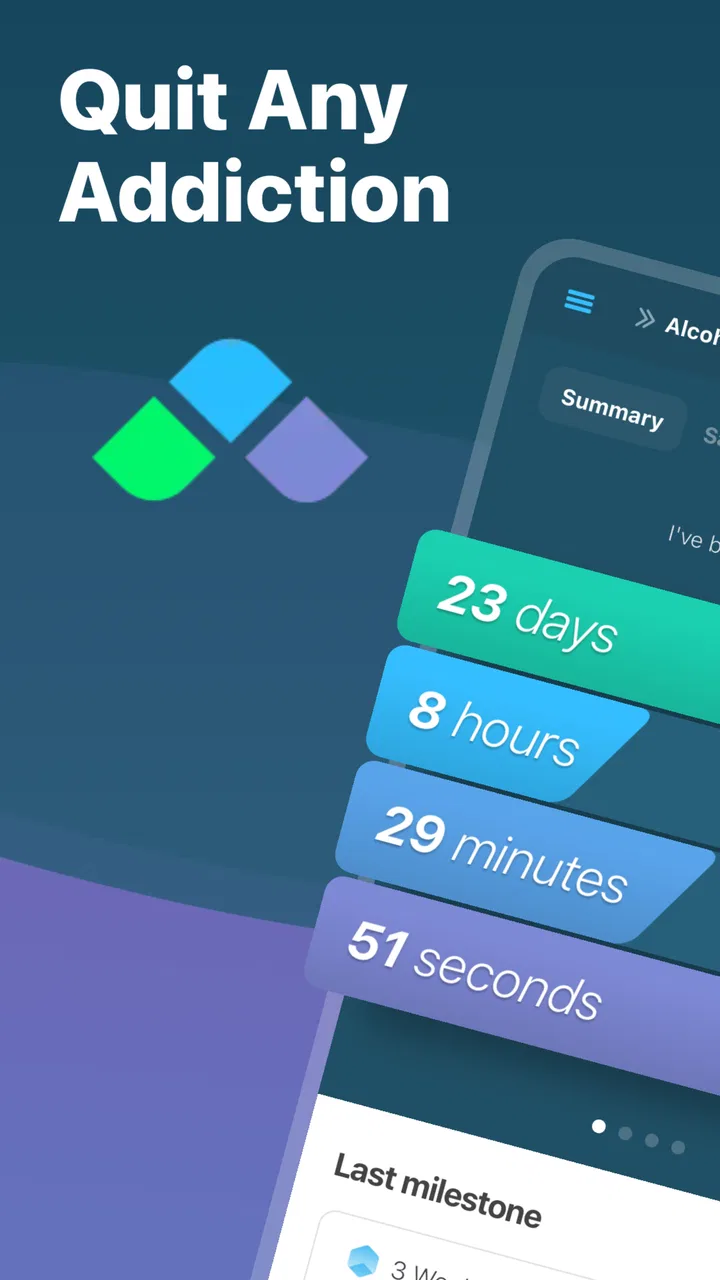
I Am Sober
- 4.7
- Rating
- 10.00M
- Installs
- Free
- Price

 Analysis by App-foxy
Recovery apps are easy to underestimate. A simple counter can look like the whole product, yet the real test comes when I am tired, stressed, or tempted to abandon the routine. I Am Sober is a lifestyle app from I Am Sober LLC built around daily addiction-recovery tracking, with particular attention to quitting alcohol and forming healthier habits. After using it as a daily check-in rather than treating it as a magic solution, I found that its main value is structure: it gives an otherwise vague goal a visible place in my day.
The app is free to install and aimed at mature users aged 17 and over. It has been available since February 18, 2014, and its current version is 8.7.6 for devices running Android 8.0 or later. Its 4.7 average from roughly 140 thousand ratings and more than 10 million installs suggest that the format has connected with a large audience. Those figures do not make it right for everyone, though. The important question is whether a private, repeatable check-in helps you stay engaged with recovery, or whether seeing a running count creates pressure that works against you.
Where people usually get stuck
The first point of friction is often not a broken screen. It is deciding what the app should mean in everyday life. If I open it only when I feel motivated, it becomes another abandoned wellness tool. Its usefulness appears when I attach it to something already happening, such as checking my phone after breakfast or writing a short reflection before bed. That small routine matters more than the novelty of the counter.
You May Also Like

 Blood Strike: 2.5 Anniversary
Blood Strike’s Loadouts Turn Every Drop Into a Tactical Gamble
A close look at Blood Strike’s custom loadouts: how fast access to signature weapons reshapes its battle royale rhythm, rewards preparation, and narrows the gap between fights.

 Pandora - Music & Podcasts
Pandora’s Music Is Easy to Start, but Harder to Recover
Pandora’s strength is its low-effort path from a seed to a station. Its weak spot is how much confidence it asks you to place in connection, setup, and quiet recovery.

 8 Ball Pool
 Is Built on Rivalries, Rematches, and Routine
A close look at the rivalries, rematches, shared routines, and unanswered safety questions that turn a quick pool match into a persistent mobile community.

 Samsung Music
’s Quiet Strength Is Playing What You Already Own
Its reach comes less from spectacle than from dependable access to a personal library. That simplicity is both the app’s strongest retention engine and its ceiling.

 AccuWeather: Weather Radar
AccuWeather Review: A Quick, Clear Forecast for Everyday Decisions
For everyday plans, the best forecast is the one you can understand quickly. AccuWeather makes rain timing, radar, and local conditions easy to act on, with a few trade-offs.

 Hill Climb Racing
Why Hill Climb Racing Still Turns Crashes Into One More Run
A tiny car, a bumpy hill and one more upgrade: Hill Climb Racing keeps resurfacing because its simple chaos makes every near-miss feel personal.
More From Our News Desk
View All News


Another common obstacle is setting an intention that is too broad. “Change everything” is emotionally understandable but difficult to review at the end of a difficult day. I get more value when I define the behavior I am tracking in plain language and decide what a successful check-in looks like before I begin. The app can support that process, but it cannot make the decision for me.
I also noticed that progress displays can affect people differently. For one person, a visible sober period is encouraging. For another, it can make a lapse feel like total failure. I would not use the counter as a judgment of my worth. I would use it as one piece of information, alongside how I slept, what triggered me, whether I reached out, and what I can change tomorrow.
That distinction is especially important for alcohol recovery. A tracking app may help me notice patterns, but it is not medical supervision, detox support, or emergency care. Someone who may be physically dependent on alcohol should not rely on an app to manage withdrawal. Stopping suddenly can be dangerous for some people, so professional medical advice is the safer starting point.
Start with a manageable daily promise
During setup, I would keep the first commitment specific enough to understand when the day is over. I would also choose language I can tolerate on a bad day. A stern promise may feel powerful at first but can become punishing after a setback. A more useful approach is to make the commitment clear, then leave room for honest reflection rather than pretending that recovery is perfectly linear.
The app is best suited to people who want a personal record they can revisit. It is less suitable for someone who dislikes daily tracking, feels distressed by streak-based thinking, or wants a complete treatment program with appointments and clinical oversight. In those cases, a therapist, support group, medical service, or a more comprehensive treatment platform may be a better primary resource.
Setup checks that prevent avoidable frustration
Before judging the app, I would check the basics. On Android, the device needs to run Android 8.0 or newer. I would also make sure the app is updated to version 8.7.6 through the normal app store and that the phone has enough free space for ordinary app operation. These are simple checks, but they eliminate a surprising number of confusing first impressions.
I would then open the app when I have a few quiet minutes rather than rushing through the first screen during a stressful moment. The goal is to understand what I am committing to, how I want to record a day, and which parts of the experience feel supportive or uncomfortable. If I start while distracted, I may create a routine that I do not actually want to maintain.
Because recovery notes can be sensitive, I would think carefully about where and when I use the app. I would avoid writing highly personal details on a shared device or in a situation where another person can easily read over my shoulder. I would also remember the account or device setup I used, particularly if I expect to change phones later. Keeping a separate, private support plan is sensible rather than assuming that a tracking app should hold every important recovery detail.
The free entry point makes it easy to test the routine without paying first. The app also offers in-app purchases ranging from $0.99 to $74.99 per item, so I would review each purchase screen calmly and decide whether an optional addition genuinely improves my routine. I would not subscribe or buy anything simply because I was having a difficult day. A purchase should solve a clear problem, not become an emotional reaction.
Use the first week as a fit test
My practical test would be simple: can I complete the daily action without feeling watched, shamed, or overwhelmed? I would note whether the wording helps me be honest, whether the process is quick enough to repeat, and whether reviewing progress gives me useful insight. I would not decide based on one unusually good or bad day.
A useful setup check is to identify the moment most likely to derail the routine. If evenings are difficult, I would decide in advance whether I will check in before the usual trigger begins or after I have safely moved past it. This turns the app from a passive diary into a small interruption in an established habit loop. The best time is not necessarily the most convenient time; it is the time when the reminder can still influence my next choice.
I would also prepare a response for a missed check-in. Rather than treating one missed day as proof that the system failed, I would reopen the app at the next realistic opportunity and record what I can honestly remember. That approach protects the habit from the all-or-nothing thinking that often undermines recovery tools.
Building a workflow that survives difficult days
My preferred workflow has three parts. First, I make the daily check-in brief enough to complete even when my concentration is poor. Second, I add one useful observation about the day, such as a trigger, a helpful choice, or a person I contacted. Third, I review the pattern occasionally instead of repeatedly staring at the counter. This keeps the app connected to behavior rather than turning it into a scoreboard.
The non-obvious advantage of this method is that it separates measurement from interpretation. The app can help me mark what happened, but I decide what it means. A difficult day may reveal that I need to avoid a particular situation, eat earlier, sleep more, or ask for support. Without that second step, a streak can show duration while hiding the reasons some days are harder than others.
I would use the app before a predictable high-risk period if I know that opening it helps me pause. For example, after work I might feel an automatic urge to drink. A short check-in at that transition point could remind me of my intention before I make the usual purchase. If the urge is already intense, however, I would not expect the app alone to carry me through it. I would pair it with a call, a meeting, a trusted person, or an immediate change of environment.
Another practical use is preparing for social situations. Before attending a gathering where alcohol will be present, I could review my reason for changing, decide how I will leave if I become uncomfortable, and identify someone I can contact. The app is useful here as a prompt for preparation, not as a substitute for a safety plan.
What to do after a lapse
A lapse is where the design philosophy matters most. I would avoid hiding it to preserve an attractive number. Honest tracking gives me a chance to identify the sequence that led there: the first thought, the situation, the available alternatives, and the point at which support might have helped. Resetting a counter may be emotionally difficult, but recording what happened can make the next attempt more informed.
I would also avoid turning the app into a punishment ritual. If every opening produces guilt, I would change how I use it or pause and seek help elsewhere. Recovery needs honesty, but honesty does not require self-attack. The strongest workflow is one that makes it easier to return after an imperfect day.
One trade-off is that a daily tracker can encourage consistency while also narrowing attention to the tracked behavior. I would deliberately include broader signs of improvement in my reflection: clearer mornings, fewer arguments, better use of money, improved reliability, or more willingness to ask for help. These changes may not fit neatly into a running counter, but they are important evidence that the work is doing something.
When the app is not the cause of the problem
If check-ins disappear, the issue may be the routine rather than the application. I would first confirm that the phone can open other apps, that the operating system meets the minimum requirement, and that I am using the current release. I would then close and reopen the app, restart the phone, and check the normal app-store update path. These are safe first steps that do not require changing sensitive settings.
If a problem appears after changing phones or reinstalling, I would slow down before deleting anything else. I would note the sign-in or setup method I used and look for the app’s ordinary account or support options. I would not assume that uninstalling will preserve every personal entry, and I would avoid experimenting with random cleaners or unofficial downloads. For recovery notes, convenience is never worth compromising privacy or losing information carelessly.
When reminders are missed, I would check the phone’s general notification settings and any battery-saving mode that may restrict background activity. I would also ask whether the reminder time still suits my day. A notification that arrives during a meeting or while I am asleep is technically functioning but practically useless. Moving the routine to a reliable moment may help more than repeatedly changing system settings.
If the app feels emotionally unhelpful, that is not necessarily a technical fault. A counter that motivates one person can trigger anxiety in another. I would try a gentler review style, reduce how often I look at progress, or use the app only for brief reflections. If even that feels harmful, I would stop using it and choose support that fits better. No app deserves priority over mental or physical safety.
There is also a boundary between a tracking problem and a health problem. Severe withdrawal symptoms, thoughts of self-harm, confusion, seizures, or an immediate risk of harm require urgent professional or emergency help, not troubleshooting. In a crisis, I would contact local emergency services or a qualified crisis resource and involve a trusted person nearby.
How it compares with the usual alternatives
Compared with a paper journal, I Am Sober is more convenient for a repeated daily record and makes the act of returning to the routine easier. A notebook can be better for long, nuanced writing and offers more freedom over layout. I would choose the app when I want a focused habit of checking in, and paper when writing itself is the main therapeutic activity.
Compared with a general habit tracker, this app is more directly shaped around addiction recovery and alcohol-free goals. A general tracker may be preferable if I want to manage many unrelated habits in one place, such as exercise, medication, sleep, and study. The trade-off is focus: a broad tracker can become cluttered, while a dedicated recovery space can keep the central intention visible.
Compared with peer-support communities, the app feels more private and self-directed. That is useful when I want to record a difficult day without immediately posting it. It is also the major limitation: a tracker cannot provide the human accountability, shared experience, or immediate conversation that a meeting, sponsor, therapist, or trusted friend can offer. I see it as a companion to support, not a replacement for support.
Compared with clinical treatment tools, it is lighter and easier to approach. It may help someone arrive at an appointment with clearer observations about triggers and routines, but it does not take the place of assessment or treatment. People with complicated substance use, co-occurring mental-health concerns, medication questions, or withdrawal risk should put qualified care ahead of app-based self-monitoring.
Who will get the most from it?
I think the best match is someone who wants a simple daily anchor, can be honest with a private record, and benefits from seeing progress over time. It can also suit a person who has tried to change a habit repeatedly and needs a small action that makes the intention visible each day. The free starting point makes experimentation reasonable, provided the purchase options are considered carefully.
I would skip it as a primary solution if I dislike streaks, rarely use phone-based journals, need real-time human contact, or am looking for structured medical care. I would also be cautious if a reset causes intense shame. In that situation, a flexible journal or professional support may protect recovery better than forcing myself to maintain a particular counter.
The mature age rating is worth taking seriously. The subject matter involves addiction and recovery, so I would not treat the app as a casual game or a general-purpose mood diary for younger users. Adults and older teens should still consider whether the content and tracking style are appropriate for their circumstances.
My practical verdict after using the routine
I Am Sober works best when I give it a modest job: help me return to my recovery intention, record the day honestly, and notice patterns I can act on. Its strength is not that it solves cravings or replaces treatment. Its strength is that it lowers the effort needed to keep recovery visible in ordinary life. That can be meaningful when motivation changes from day to day.
I appreciate the combination of a free starting point, a focused recovery purpose, and a format that can fit into a short daily routine. I also appreciate that its value does not depend on writing a perfect journal entry. A few honest moments can be more useful than an elaborate plan I never reopen.
My reservations are equally clear. A counter can become a source of pressure, a missed check-in can feel larger than it is, and the app cannot provide the clinical or personal support that serious recovery may require. Optional purchases also mean I would pay attention during setup rather than tapping through every offer. These are not reasons to dismiss it, but they are reasons to use it deliberately.
For me, the deciding test is whether opening the app leads to a constructive next step. If it helps me avoid a trigger, contact support, or understand a difficult pattern, it earns a place in my routine. If it only makes me worry about numbers, I would change the workflow or choose another form of help. Use it as a practical checkpoint, not as a verdict on your recovery.
Overall, I would recommend it to someone beginning a personal alcohol-free goal or trying to make daily accountability more consistent, especially when paired with trusted people and appropriate professional care. I would not recommend relying on it alone for withdrawal, crisis support, or complex treatment needs. Used within those limits, this lifestyle app offers a clear and approachable way to keep an important promise in view without pretending that recovery can be reduced to a single number.
FAQs for I Am Sober
01What is I Am Sober, and what does the app do?
I Am Sober is a sobriety-tracking and recovery-support app designed to help users monitor their progress while avoiding alcohol, drugs, or other habits they want to quit. After choosing a goal, you can record your sober days, reflect on triggers, read motivational content, and review milestones. It is intended as a personal support tool, not a replacement for professional medical or addiction treatment.
02Is I Am Sober free to download and use?
I Am Sober can generally be downloaded for free, and its basic features allow users to set a sobriety date, track progress, and receive motivational support. However, some additional tools, customization options, insights, or premium content may require a subscription or in-app purchase. Before confirming payment, check the current pricing, trial period, and renewal terms shown in the Google Play Store or Apple App Store.
03Can I use I Am Sober for different types of addictions or habits?
Yes. I Am Sober is not limited to alcohol recovery. During setup, users can typically select a substance, behavior, or personal habit they want to stop or reduce, making the app adaptable to different recovery goals. The available guidance may vary depending on the selected goal, so users dealing with serious substance dependence should also seek qualified medical or counseling support.
04Does I Am Sober provide professional addiction treatment or emergency help?
No. I Am Sober is primarily a self-monitoring and motivation app. It may encourage reflection, provide recovery-related information, and help users connect with supportive communities, but it does not diagnose addiction, prescribe treatment, or replace a doctor, therapist, rehabilitation program, or support group. If you are experiencing withdrawal symptoms, a crisis, or immediate danger, contact local emergency services or a qualified professional.
05Is my personal recovery information private in I Am Sober?
The app may store information such as your sobriety date, daily reflections, goals, and progress statistics, so privacy should be reviewed before creating an account or entering sensitive details. Check I Am Sober’s current privacy policy to understand data collection, storage, sharing, and deletion practices. Use a strong password, review community-sharing settings carefully, and avoid posting identifying information publicly.
Pros
- Daily check-ins make progress easy to track.
- Milestones provide motivating reminders of your achievements.
- Customizable pledges help reinforce personal recovery goals.
- The interface is clean
- calm
- and simple to navigate.
- Useful statistics can reveal patterns in your sobriety journey.
Cons
- Some helpful features require a premium subscription.
- It is not a replacement for professional treatment or counseling.
- Reminders may feel repetitive during long-term use.
- Community content can vary in quality and personal relevance.
- Entering detailed information every day may become a chore.

I Am Sober
Gallery